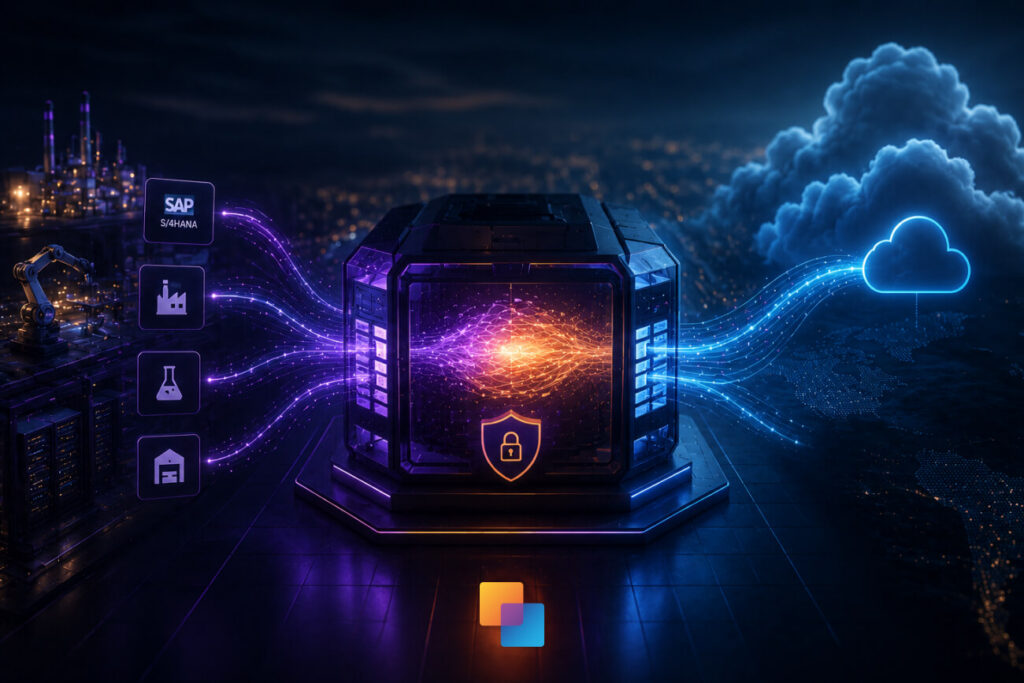
A global pharmaceutical company manufactures life-saving medications across multiple countries. Their SAP landscape exchanges thousands of messages every hour between SAP S/4HANA, manufacturing systems, laboratory applications, warehouse automation platforms, and external partners. Some of that information includes production records, quality documentation, and regulated data that must remain within specific geographic boundaries.
Cloud integration offers flexibility. But for workloads with strict compliance, security, or data sovereignty requirements, something more is needed.
Where SAP Edge Integration Cell (EIC) Comes In
SAP EIC extends the capabilities of SAP Integration Suite within SAP BTP, allowing organizations to run integration workloads within their own controlled environments while maintaining a consistent integration experience. It delivers the flexibility of modern cloud integration with the governance, security, and compliance controls that highly regulated enterprises require.
In practical terms: SAP EIC lets companies keep sensitive integrations closer to their systems and data while still benefiting from SAP’s broader integration strategy.
Why SAP Introduced EIC
As organizations move to the cloud, a common challenge has emerged: not every integration workload belongs in a public cloud environment.
Regulatory requirements, data sovereignty laws, security mandates, and operational constraints frequently dictate where information can reside and how it can be processed.
This is especially true in these highly regulated industries:
- Financial institutions handling sensitive customer and transaction data
- Pharmaceutical and life sciences companies subject to GxP regulations
- Government agencies with strict security requirements
- Manufacturers operating critical production environments
- Utilities and energy providers supporting operational technology systems
- Healthcare providers managing protected health information
SAP recognizes that customers need a way to modernize integration architectures without surrendering control over sensitive workloads. EIC is the answer.
Security and Compliance Advantages
For most organizations, security and compliance drive initial interest in EIC.
Traditional cloud integration models require data to traverse external environments before reaching its final destination. For industries with geographic data residency rules, this creates a compliance problem. SAP EIC resolves this issue by allowing organizations to process integrations within approved environments while adhering to regulatory requirements.
Security teams can also align integration processing with existing enterprise controls, including:
- Network segmentation
- Identity and access management
- Encryption standards
- Security monitoring platforms
- Compliance auditing processes
The result is tighter control over the movement of sensitive business data, with fewer systems and locations involved in its processing.
Who Uses SAP EIC
SAP EIC is purpose-built for regulated, operationally complex industries. Here’s how it looks in practice.
Financial Services
A banking organization integrates core banking platforms with SAP applications and external service providers. Customer information and transaction records require stringent security controls. EIC keeps sensitive integration flows within tightly governed environments while supporting ongoing digital transformation.
Pharmaceutical Manufacturing
A global pharmaceutical manufacturer integrates SAP S/4HANA with laboratory information systems and manufacturing execution systems. Quality and production data are subject to strict regulatory requirements. EIC allows sensitive manufacturing transactions to be processed within controlled environments while still supporting enterprise-wide integration initiatives.
Aerospace and Defense
An aerospace manufacturer exchanges information between SAP systems, engineering applications, supply chain partners, and production systems. Security requirements and contractual obligations demand extensive control over data processing. EIC provides an integration architecture aligned with those governance expectations.
Utilities and Energy
A utility company integrates SAP asset management systems with operational technology platforms supporting field equipment and infrastructure monitoring. EIC supports localized processing and low-latency requirements while maintaining centralized integration governance.
Healthcare
Healthcare organizations connect SAP applications with clinical systems, scheduling platforms, and patient-related services. EIC keeps sensitive workflows within controlled environments, aligning integration operations with healthcare compliance requirements and internal security policies.
Where EIC Fits into SAP’s Strategy
SAP’s direction remains cloud-first. But enterprise landscapes are complex, distributed, and unlikely to be fully cloud-native for years. Organizations are simultaneously managing cloud adoption, data sovereignty requirements, cybersecurity initiatives, regulatory obligations, and operational resiliency goals. EIC reflects a pragmatic acknowledgment of that reality.
Rather than forcing all integration workloads into a single deployment model, SAP gives customers the ability to determine the appropriate location for each workload based on business, security, and compliance needs. That flexibility is increasingly the difference between a modernization strategy that works in practice and one that stalls at the edge cases.
Final Thoughts
SAP Edge Integration Cell is more than an integration runtime. It’s a strategic capability that enables organizations to modernize their integration landscapes without sacrificing control over critical business processes or sensitive information.
For highly regulated industries, EIC provides a pathway to cloud modernization that doesn’t force a compliance tradeoff.
For enterprise architects managing hybrid landscapes, it offers a practical, durable approach to supporting that complexity. As SAP customers expand their digital ecosystems, EIC provides a powerful option for balancing innovation with control: integrating confidently, securely, and on their own terms.
Apiphani helps enterprises implement and manage SAP integration environments. If you’re evaluating Edge Integration Cell for your landscape, we’d welcome a conversation.

About the Author
Tyler Constable is Principal Director of Solutions Engineering at apiphani. He has extensive expertise with SAP, cloud infrastructure, and cloud security. He is an SAP ASUG member and frequently presents at various SAP events. Tyler resides in Milwaukee, Wisconsin.
Contact Us
- Tell us more about your business and what you need from automation and business software.
- One Financial Center
16th Floor
Boston, MA 02111 - Request a Quote: +1 (833) 695-0811